NE
Radon Test Kits in Red Willow County, NE: Free at 1 office
A radon test kit is free in Red Willow County. Call the Southwest Nebraska Public Health Department at 308-345-4223 to get the kit.
Test kit and radon detector
Southwest Nebraska Free Radon Kits
Free
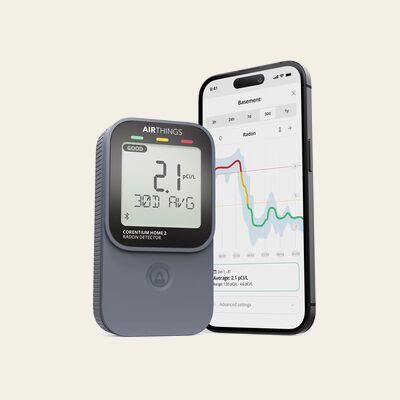
Corentium Home 2
$179.99 checked November 20, 2026
Radon changes day to day and season to season., note 1 A detector shows your number every day.
The small commission from purchases made through this link helps keep this free public directory open, at no extra cost to you.
See the Corentium Home 2Compare all four detectors
- EPA Citizen's Guide (PDF), page 5

Checked .

By Bill Dahlstrom, 15 years in radon mitigation. His company has more than 700 five-star Google reviews. Health facts on this page come from the agencies linked here. About Bill
Where to get a kit
Southwest Nebraska Free Radon Kits
Office:
- Southwest Nebraska Public Health Department, 404 West 10th Street, 308-345-4223
Call 308-345-4223 or email info@swhealth.ne.gov to request a free radon test kit.
- Who can get it
- Community members living in one of the nine counties we serve
- How to get it
- Call or email SWNPHD.
Key facts
- Lowest listed local price
- Free
Free kit from the Southwest Nebraska Public Health Department.
Radon test results in Red Willow County
Numbers in this chart
| Measure | Value |
|---|---|
| Period | October 1, 2018 to September 30, 2023 |
| Tests | 247 |
| Average | 5 pCi/L |
| EPA action level | 4.0 pCi/L |
Source: Nebraska health department.
Local radon notes
The health district gives Red Willow County residents a free radon test kit after they watch a short radon video and fill out a questionnaire, and the McCook office hands them out in person.
The district confirms the free home kits cover all nine of its counties, Red Willow included, and its kits ship straight to the lab with a prepaid label.
Red Willow County residents can also reach the district's radon staff by phone in McCook for help with next steps after a high result.
What Red Willow County publishes
The 2023 Nebraska radon measurement report marks the Red Willow County average as exceeding 2.7 pCi/L. The report's column for that mark is headed Average Radon Levels Exceeding 2.7 pCi/L. The tests behind the report were submitted from October 1, 2018 to September 30, 2023.